
Chronic hepatitis B can be a severe, long-term disease
Progression of chronic hepatitis B
The course of chronic hepatitis B is nonlinear and characterized by repeated liver cell destruction and regeneration over long periods of time.1-3
Effects of chronic hepatitis B on the liver2,4



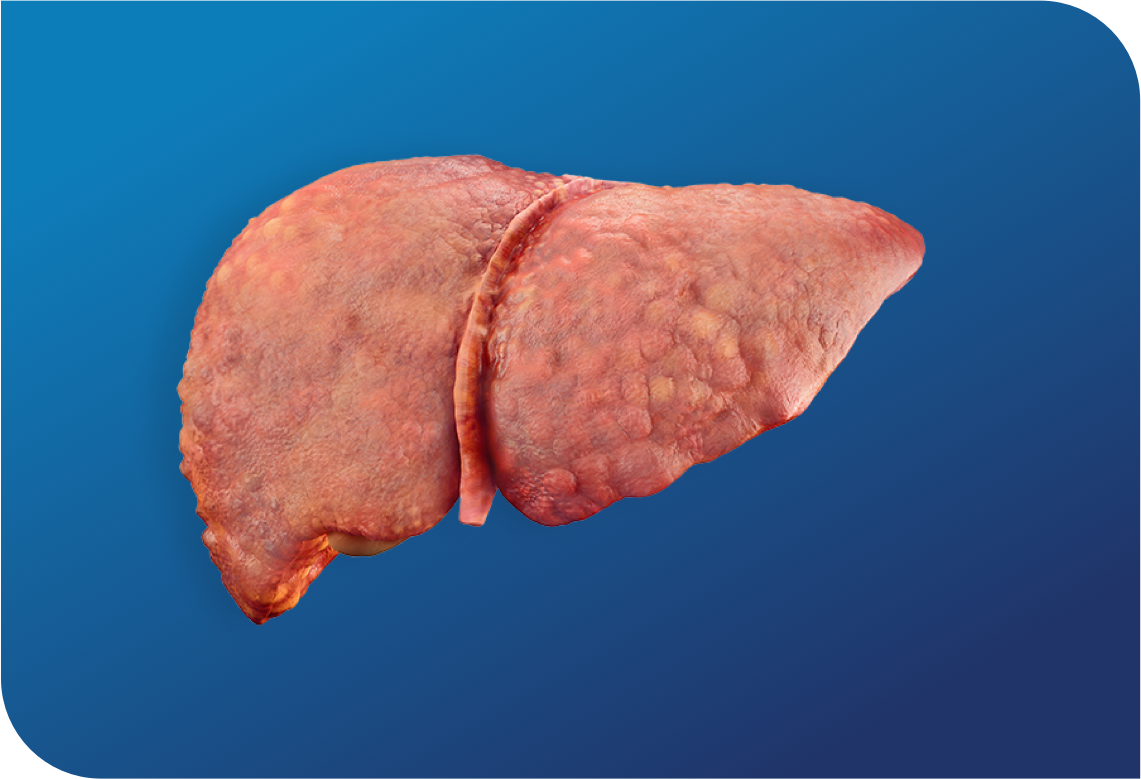
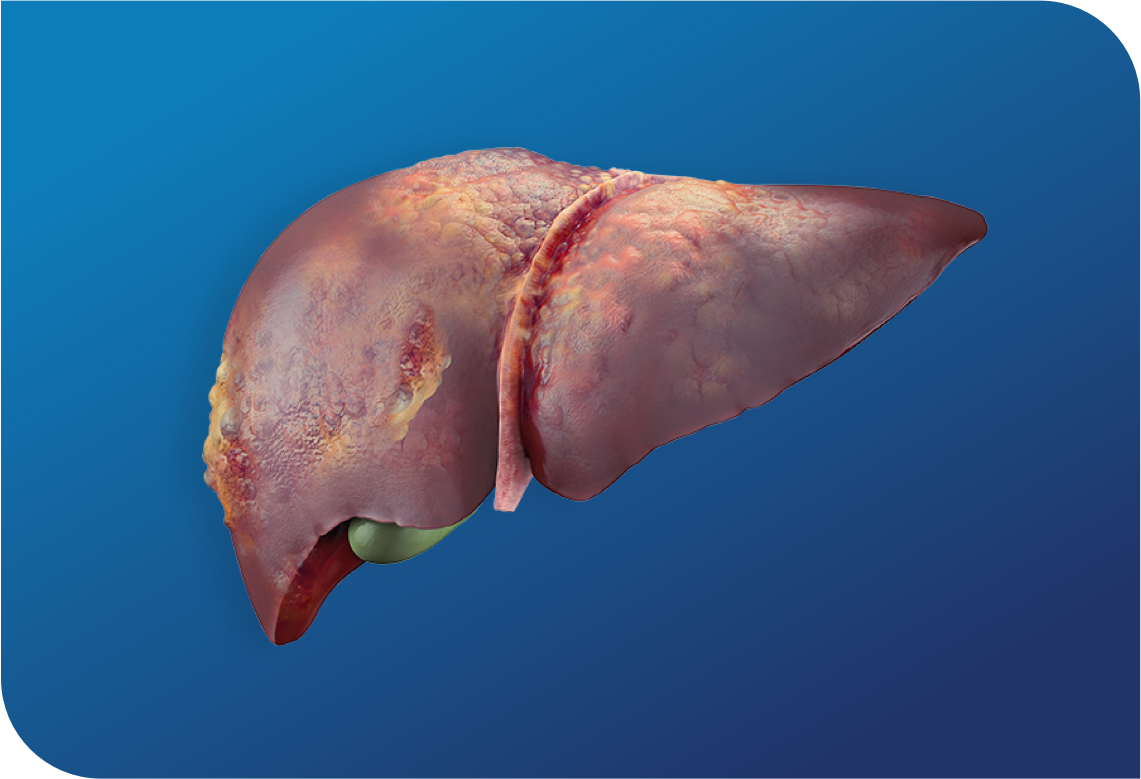





20% TO 30%
of adults with chronic hepatitis B will develop complications such as cirrhosis and hepatocellular carcinoma (HCC)1
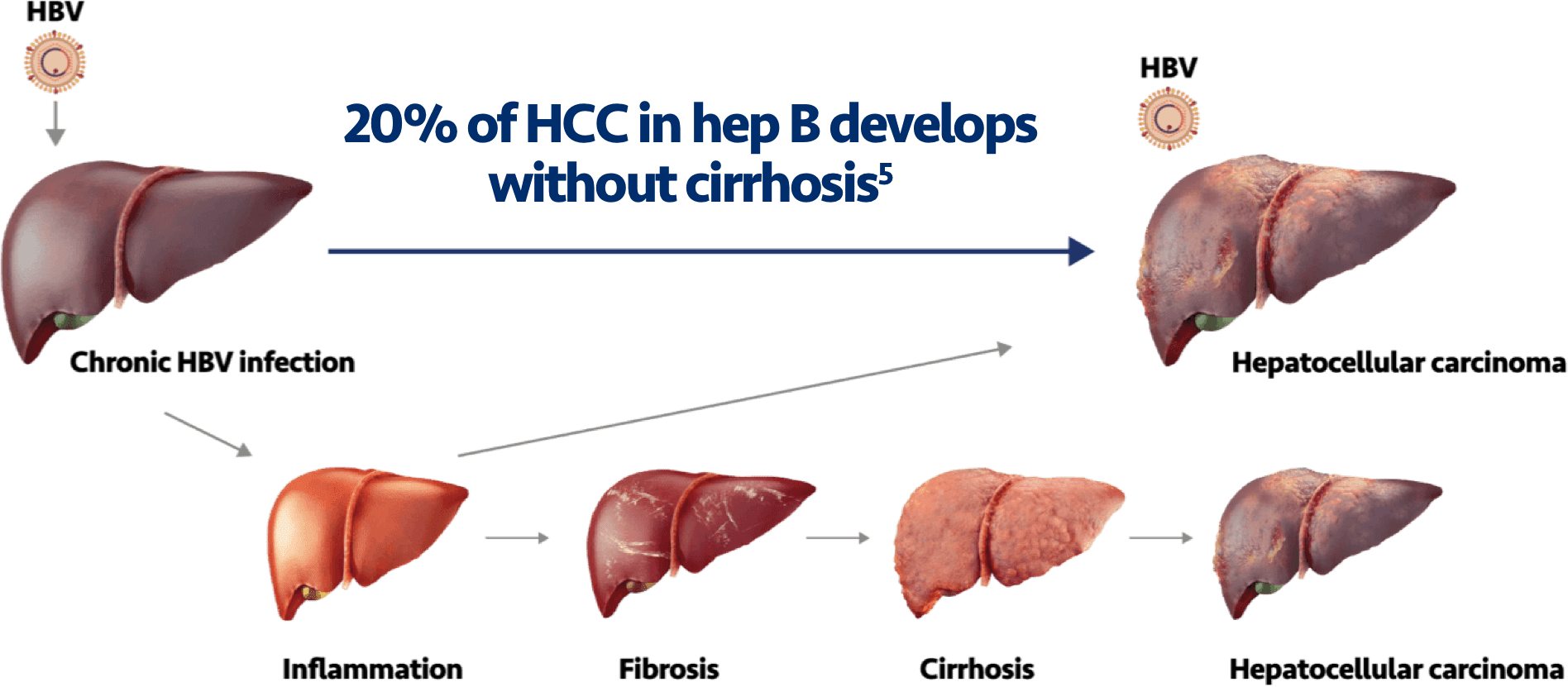
HBV infection increases the risk of HCC through direct and indirect mechanisms, which may occur at early stages of tumor development and during any phase of HBV infection6-8
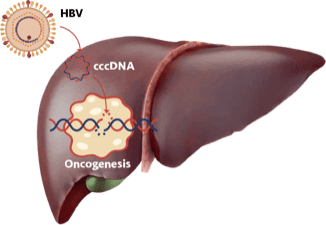
- Direct mechanisms revolve around the ability of HBV to integrate into the host's genome, leading to potentially carcinogenic chromosomal aberrations and protein expression6-8
- Indirect mechanisms center on the ability of HBV to induce continuous, recurring liver necroinflammation, which may culminate in the development of cirrhosis6,8
- Persons with chronic hepatitis B are at a 25- to 37-fold increased risk of HCC compared to non-infected people9
Real-world data indicate that using HBV DNA level >2000 IU/mL alone for patients without cirrhosis, and removing ALT and HBeAg treatment eligibility criteria, could impact long-term outcomes for patients with chronic hepatitis B9,10
Long-term considerations
For some patients, chronic hepatitis B is a lifelong disease that requires long-term or indefinite therapy.1,11-15
-
People with chronic hepatitis B are at risk for developing comorbidities, including diabetes, metabolic syndrome, and renal and bone conditions
- Risk for some comorbidities increases with age
Chronic hepatitis B treatment goals
When a patient has been diagnosed with chronic hepatitis B, clinical endpoints of therapy include11,16:
- Achieving sustained suppression of HBV replication
- ALT normalization
- Reducing the risk of liver damage
- HBsAg loss
- Confirmed loss of HBeAg and seroconversion to anti-HBe antibodies (for HBeAg-positive patients) in combination with HBV DNA <2000 IU/mL, which can serve as an intermediate treatment endpoint
ALT=alanine aminotransferase; HBe=hepatitis B e; HBeAg=hepatitis B envelope antigen, HBsAg=hepatitis B surface antigen.
a Hepatocellular carcinoma may occur in patients with chronic hepatitis B without cirrhosis.1